Browse topics
Drinking Water
Original WaterWorldCE course descriptions and educational objectives for water and wastewater industry professionals.
Original contact hours: 1Original format: Course materialDrinking Water · Environmental Monitoring · Industrial/Commercial Water Systems · Lab, Sampling & Analytical · Municipal Wastewater
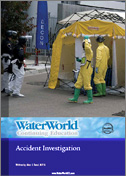
This operator education course will examine accident investigation, identify the components of a prevention program, and describe how to implement the program. Treatment plant safety reflects literally thousands of hazards. Preparation for all hazards, regardless of their chance of occurring in one’s particular circumstances, is an almost impossible task. However, implementation of an accident investigation program can effectively focus a facility on safety issues..
Educational Objectives:
- Understand why accidents should be investigated.
- Know who should investigate accidents.
- Understand accident investigation follow-up.
- Be able to apply accident investigation concepts.
Original contact hours: 1Original format: InteractiveDrinking Water
This online educational course is designed to help increase your knowledge and understanding of Disinfection By-Product (DBP) challenges affecting the municipal drinking water industry. Provide is an update on US-EPA Sage II DBPR regulations, as well as recommended compliance solutions that remediate targeted contaminants.
Educational Objectives:
- Reviewing the regulated DBP challenges.
- Determining the emerging DBP challenge.
- Applying technology to the DBP challenges.
Original contact hours: 1Original format: PDFDrinking Water · Environmental Monitoring

This course will investigate different types of algae and their affect on water treatment processes and water quality. In addition, methods to control algae in surface water will be discussed.
Educational Objectives:
- Describe the effects of algae on daily lives.
- List the four identification categories of alg.
- Discuss how structure relates to different algae.
- Describe indicators for water quality.
- List common algae problems found in raw water.
- Identify algae problems that may exist in treated water.
- Identify methods for chemical control of algae.
Original contact hours: 1Original format: PDFDrinking Water · Industrial/Commercial Water Systems · Municipal Wastewater

Supervisory Control and Data Acquisition (SCADA) systems have become widely used by water, wastewater, distribution, collection and laboratory personnel in the treatment processes of water and wastewater. This course from TEEX ® operators will learn the definition, components, uses, benefits, and limitations of a Supervisory Control and Data Acquisition (SCADA) system in water and wastewater treatment.
Educational Objectives:
- Restate the definition of a SCADA system.
- List the components of a SCADA system.
- Describe appropriate uses of a SCADA system.
- Explain nitrate removal by denitrification.
- Explain the benefits of a SCADA system/li>
- Describe the limitations of a SCADA system.
Original contact hours: 1Original format: InteractiveDrinking Water · Industrial/Commercial Water Systems
This online educational course is designed to help increase your knowledge and understanding of the basic science of activated carbon and its water treatment applications. Explained in this presentation are the physical properties of activated carbon, how the material is manufactured, and the water filtration and purification process in which activated carbon removes organic compounds through adsorption.
Educational Objectives:
- Define activated carbon.
- Describe how activated carbon works.
- Explain the activation process of how activated carbon is made.
- Successfully apply activated carbon technology.
Original contact hours: 1Original format: PDFDrinking Water · Industrial/Commercial Water Systems · Municipal Wastewater
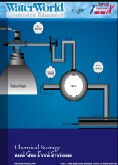
Chlorine gas is the most often used disinfectant. It remains the best choice for the price and provides an excellent kill. Because chlorine gas is toxic, safe handling, storage, and use is mandatory. This course will examine the basic parts of a chlorinator and proper operation as well as storage and handling of chlorine vessels.
Educational Objectives:
- List the universal components of a gas chlorination system.
- Explain how chlorinators work.
- Describe the purpose of each of the universal components of a gas chlorination system.
- Review some principles of safe chemical storage.
- Discuss how to safely handle chlorine.
Original contact hours: 1Original format: PDFDrinking Water · Environmental Monitoring · Industrial/Commercial Water Systems · Municipal Wastewater · Pipe Installation & Maintenance · Pumping Systems · Stormwater Management
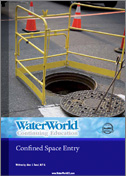
In the water industry, many tasks take place in confined spaces. Confined space entry is hazardous and failure to follow proper safety measures can end in death. This operator education course will explain the dangers associated with Confined Space Entry, elements of a permit required CSE program and give an overview of proper entry procedures.
Educational Objectives:
- Understand what constitutes a confined space.
- Understand hazards of confined spaces.
- Be aware of other dangers associated with confined space entry.
- Understand entry procedures.
- Understand why confined space entry accidents still happen.
Original contact hours: 1Original format: PDFDrinking Water
This operator education course describes the purpose of drinking water disinfection and the desirable properties of a disinfectant. Pathogens and indicator organisms are defined and various disinfectants and their advantages and disadvantages are discussed. Finally, disinfectant residuals, byproducts, and regulations are covered.
Educational Objectives:
- Understand the definition of a pathogen.
- Understand the need to disinfect drinking water.
- Understand the role of indicator organisms.
- Understand the characteristics of various disinfectants.
- Understand the role of residuals in the distribution system.
Original contact hours: 1Original format: PDFDrinking Water · Lab, Sampling & Analytical
This course defines hardness as it relates to drinking water and discusses some of the associated problems. The precipitation softening process for drinking water treatment is also discussed with an emphasis on the chemistry of softening.
Educational Objectives:
- Upon completion of this course, the operator should understand the cause of drinking water hardness, the impacts and the precipitation process for softening.
Original contact hours: 1Original format: PDFDrinking Water
This course defines colloidal particles and the processes of coagulation and flocculation, as related to removing turbidity from drinking water. Included are the characteristics of coagulants and the basics of flocculation. Jar testing, used to select coagulants and optimize the coagulation/flocculation process, is also addressed.
Educational Objectives:
- Understand what a colloidal particle (turbidity) is.
- Understand the processes to remove them using the coagulation and flocculation process.
- Basic understanding coagulants, coagulant aids and jar testing.
Original contact hours: 1Original format: PDFDrinking Water · Industrial/Commercial Water Systems · Municipal Wastewater
This course is designed to provide Water/Wastewater employees information on the Hazard Communication Program requirements in OSHA regulation 29CFR1910.1200. Additional facility specific information on chemical use and storage programs are discussed. General requirements for chemical identification, chemical storage and chemical handling will be covered in this course.
Educational Objectives:
- Understand the handling, use and identification of chemical hazards in the workplace.
- Learn to identify health and safety hazards associated with the chemicals used in the various water/wastewater treatment processes.
- Understand information provided in the manufacturers Material Safety Data Sheet (MSDS).
- Become aware of what personal protective equipment (PPE) is needed when working with a hazardous chemical.
Original contact hours: 1Original format: PDFDrinking Water
This operator education course explains in a step by step method how to perform the Total Coliform analytical test for drinking water, including quality assurance and control measures. Upon completion of this Contact Hour, the analyst should understand how to prepare needed solutions, media, count colonies and correctly interpret the test results with respect to drinking water quality. In addition, a table outlining suggested volumes for nine water sources, including drinking water is provided. Some sample calculations along with a question and answer section is also provided to aid the analyst in understanding the material.
Educational Objectives:
- Understand how to prepare needed solutions and media.
- Understand how to correctly interpret the test results with respect to drinking water quality.
- Understand how to use a table to determine sample volumes from other water sources. .
- Understand the water treatment plant chlorine disinfection method as it relates to the Total Coliform analytical test.
Original contact hours: 1Original format: PDFDrinking Water · Industrial/Commercial Water Systems · Municipal Wastewater · Pipe Installation & Maintenance
This operator education course will provide the operator with an overview of pipe flow. Pipe flow is a fundamental part of both water and wastewater plants. The course will examine the math and science behind pipe flow. Operators will also learn about fluids and how fluids travel through pipes. Specifically, operators will learn about these three important fluid properties: viscosity, specific weight, and compressibility.
Educational Objectives:
- Understand the math and science behind pipe flow.
- Understand how fluids travel through pipes.
- Understand the properties of viscosity, specific weight and compressibility.
Original contact hours: 1Original format: PDFDrinking Water · Lab, Sampling & Analytical · Municipal Wastewater
This operator education course will enable the operator/analyst to understand and develop a QA/QC plan for a Water and Wastewater Treatment Plant laboratory. Even though the Water and Wastewater Treatment Plant have different functions, the importance of the laboratory data accuracy remains the same.
Educational Objectives:
- Understand how to produce legally defensible analytical records of test results.
- Understand equipment calibration and preventative maintenance procedures.
- Understand the process for validating methods used to analyze a sample.
Original contact hours: 1Original format: InteractiveDrinking Water · Industrial/Commercial Water Systems · Municipal Wastewater
Low pressure membranes are becoming the preferred drinking water treatment process to meet consumer demand and regulatory pressure for better quality drinking water along with tightening budgetary constraints. As a relatively new treatment process, the drinking water industry is learning that the old ways of doing things has to change to accommodate the use of low pressure membranes. This presentation will focus on the unique features and challenges that a municipality will face when choosing to use low pressure membranes for their water treatment plant. The topics to be discussed include pilot testing; procurement; design & coordination; membrane fouling management; membrane fiber breakage management; commissioning and startup; operator training; collecting and recording data to maintain operations; and membrane terms and calculations.
Educational Objectives:
- Understand treatment process changes required to implement low pressure membrane systems.
- Have a good grasp of the process involved in selecting and implementing low pressure membrane systems.
- Have been exposed to various membrane terms and calculations.
- Understand the data collecting, recording and reporting needs of membrane treatment systems.
Original contact hours: 1Original format: PDFDrinking Water · Pipe Installation & Maintenance
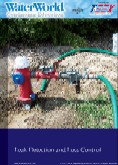
Unexplained water loss is a problem for most public water systems. This course from the trainers at TEEX ® will discuss how to account for water loss, how to identify methods of locating underground leaks, and how to repair leaks.
Educational Objectives:
- Discuss how to account for water loss.
- Describe methods to locate underground leaks.
- Explain the procedure to repair water leaks.
Original contact hours: 1Original format: PDFDrinking Water · Industrial/Commercial Water Systems · Municipal Wastewater
This course is designed to help an operator understand how lockout/tagout affects their job duties and may assist in the development of a basic lockout/tagout program. However, this course is in no way intended to be a substitute for the proper development of a lockout/tagout program, including site-specific training that is required by OSHA..
Educational Objectives:
- Understand the importance of a Lockout/ Tagout program.
- Understand the formal program requirements.
- Be able to identify hazards.
- Understand the process for removal of lockout devices.
- Be familiar with training requirements of the program.
Original contact hours: 1Original format: PDFDrinking Water
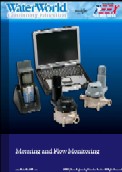
The water meter is the last checkpoint in the water distribution system before treated water is used by consumers. This course will review the various meters, their installation and maintenance, and causes for water loss within the distribution system.
Educational Objectives:
- Describe the purpose and benefits of meters.
- Identify the various meter designs.
- Explain how customer meters are sized.
- List the steps in proper meter installation.
- Discuss the need for replacing meters.
- List the meter records that should be maintained.
- Recognize the causes of unaccounted-for water loss.
- Discuss the benefits of using an automatic meter reading system.
Original contact hours: 2Original format: PDFDrinking Water · Municipal Wastewater · Pumping Systems
This operator education course will address why a pump maintenance program is important. The design features and components of centrifugal pumps and positive displacement pumps are described along with the need for and maintenance of packing and mechanical seals in centrifugal pumps.
Educational Objectives:
- Explain the importance of a pump maintenance program.
- Recognize the design features and components of a centrifugal pump.
- Recognize various positive displacement pumps and their applications.
- Recognize the need for packing in a centrifugal pump.
- Describe the use of mechanical seals in a centrifugal pump.
Original contact hours: 1Original format: PDFDrinking Water · Lab, Sampling & Analytical · Municipal Wastewater
This course is designed to introduce the operator/analyst to sampling and field analysis methodology at water and wastewater treatment plants. At the heart of any effective analysis is the necessity for quality assurance and quality control. Not all water and wastewater analysis is done in the laboratory. It is often a single individual who must have the knowledge and capabilities of both an operator and an analyst. Inasmuch, he/she must be well-versed in the necessity of quality assurance and quality control in the collection and analysis of water or wastewater, not only in a laboratory setting, but also in the field.
Educational Objectives:
- Explain the importance of quality assurance and quality control in the field.
- Discuss the duties of the operator relevant to sampling and analysis.
- Describe proper steps for field collection of samples for water or wastewater analysis.
- Describe field analysis methods for water and wastewater systems.
Original contact hours: 1Original format: PDFDrinking Water · Municipal Wastewater
This course will review the clarification process. Clarification provides for the separation of the solids from the liquid so that both streams can be processed further.
Educational Objectives:
- Explain the operation of clarifiers.
- Describe the types of particles that settle in the clarifier.
- Summarize the types of settling processes.
- Discuss the importance of clarifier sizing.
- Identify the types of clarifiers.
- Describe various clarifier flow patterns.
- Discuss maintaining mass balance in the clarifier.
- Summarize hydraulic principles associated with proper clarifier operation.
Original contact hours: 1Original format: InteractiveDrinking Water · Industrial/Commercial Water Systems
This online educational course is designed to help increase your knowledge and understanding of the basic science and technologies involved with determining the source of taste and water issues that challenge municipal drinking water systems, as well as solutions that remove and control the contributing contaminants.
Educational Objectives:
- Defining taste and odor.
- Taste and odor regulations.
- Measuring taste and odor.
- Determining the source of taste and odor.
- Solving taste and odor issues.
Original contact hours: 1Original format: PDFDrinking Water · Lab, Sampling & Analytical
For many years, surface water operators have recognized the ability of algae, phytoplankton, and bacterial organisms to produce tastes, odors, and clogging of sand filters. These organisms affect pH, alkalinity, corrosion, toxicity, color, turbidity in water, and the operations of water systems. This course will help the water plant operator to better understand problems associated with microorganisms in drinking water, how to identify and analyze taste and odor problems, and how to correct the problems associated with taste and odor problems in drinking water.
Educational Objectives:
- Identify the causes of taste and odor in municipal water supplies.
- Describe the characteristics of taste and odor problems.
- Discuss methods to control taste and odor in drinking water.
Original contact hours: 1Original format: InteractiveDrinking Water · Industrial/Commercial Water Systems · Municipal Wastewater

This online educational course is designed to help increase your knowledge and understanding of the basic science and technologies involved with utilizing Ultraviolet (UV) light for drinking water disinfection. Explained in this presentation is how UV technology is applied to the drinking water purification process to effectively inactivate Cryptosporidium and other similar pathogens.
Educational Objectives:
- Defining Ultraviolet (UV) light.
- UV Markets/Applications.
- Determining how UV lamps work.
- Common types of UV lamps.
- Defining terminology.
Original contact hours: 1Original format: InteractiveDrinking Water · Industrial/Commercial Water Systems · Municipal Wastewater
This online educational course is designed to help increase your knowledge and understanding of the basic science and technologies involved with utilizing Ultraviolet (UV) light for drinking water disinfection. Explained in this presentation is how UV technology is applied to the drinking water purification process to effectively inactivate Cryptosporidium and other similar pathogens.
Educational Objectives:
- Options for controlling potential risks.
- How UV disinfection works.
- Factors affecting system performance.
- Dose response and reduction equivalent dose.
- UV system design.
Original contact hours: 1Original format: InteractiveDrinking Water · Industrial/Commercial Water Systems · Municipal Wastewater

This online educational course is designed to help increase your knowledge and understanding of the basic science and technologies involved with utilizing Ultraviolet (UV) oxidation for water purification. Explained in this presentation is how UV light technology and oxidizing agents are applied to a water treatment process to destroy organic contaminants.
Educational Objectives:
- UV Oxidation basics.
- Design Parameters – 3 P’s and a D.
- Design Test.
- Reaction Kinetics and UV Utilization.
- Effect of path length and spectral effects.
- Dose distribution and CFD modeling.
Original contact hours: 1Original format: PDFDrinking Water
This Operator Education course describes the basic fundamentals, techniques, instruments, and skills needed to work safely around a water distribution system.
Educational Objectives:
- Understand the basic fundamentals and skills needed to work safely around a water plant and distribution system.
- Learn the various dangers associated with distribution system work and the components to work safely when these dangers present a potential for injury.
- Understand that everyone who works in the water treatment, storage, and distribution system is responsible for safety.
Original contact hours: 1Original format: PDFDrinking Water · Lab, Sampling & Analytical · Pipe Installation & Maintenance
This Cross Connection Control course describes the basic fundamental techniques, instruments, and skills needed for a water distribution operator to control and prevent contamination of potable water systems due to cross connections.
Educational Objectives:
- Gain a basic understanding of how to control and prevent cross connections into potable water supplies.
- Learn basic information on Chlorine residuals, waterborne bacteria and viruses, hydraulics, and pressure.
- Gain knowledge of the various dangers associated with potable water corruption and how to avoid possible contamination.
- Understand the basics of hydraulics and pressure and their impact on cross connection control.
Original contact hours: 1Original format: PDFDrinking Water · Lab, Sampling & Analytical · Pipe Installation & Maintenance
In this course, the operator will accumulate valuable knowledge and understanding of the various types of piping and valves used in a water distribution system, their purpose, and usefulness and functions. In addition, microbiology water borne disease, origins & sources of potable water, and how distribution systems affect outbreaks will be examined. In the latter part of the course, Potable water, Compound Pipe Systems, Friction Loss, Compound Pipe Systems, Chlorine Residual for Water Distribution System, Heterotrophic Bacteria, Sampling Techniques, Microbiology and Waterborne Disease Outbreaks, Transmission and Distribution Mains will be explored.
Educational Objectives:
- Understand the various types of piping and valves used in a water distribution system.
- Understand the nature of microbiology water borne disease and how distribution systems affect outbreaks.
- Understand the importance of chlorine residual for water distribution systems.
- Understand basic sampling techniques in transmission and distribution mains.
Original contact hours: 1Original format: InteractiveDrinking Water · Municipal Wastewater
The Reverse Osmosis Operation & Maintenance Course includes 11 units. The series provides practical information necessary to thoroughly understand Reverse Osmosis (RO) and Nanofiltration (NF) water treatment technologies and helps operators apply that knowledge while operating a reverse osmosis water treatment facility. Unit 1: Water Contaminants, will provide information on various contaminants of concern for RO Systems, including Ions, Gases, Organics & Silica.
Educational Objectives:
- Understand Water Contaminants.
- Know How RO Membranes Reject Them.
Original contact hours: 1Original format: InteractiveDrinking Water · Municipal Wastewater
The Reverse Osmosis Operation & Maintenance Course includes 11 units. The series provides practical information necessary to thoroughly understand Reverse Osmosis (RO) and Nanofiltration (NF) water treatment technologies and helps operators apply that knowledge while operating a reverse osmosis water treatment facility. Unit 10: Pretreatment will discussing ways to: Minimize scaling; Minimize fouling; and Minimize chemical attack.
Educational Objectives:
- Know how to control scaling, fouling and chemical attack by using appropriate pretreatment technologies.
Original contact hours: 1Original format: InteractiveDrinking Water · Municipal Wastewater
The Reverse Osmosis Operation & Maintenance Course includes 11 units. The series provides practical information necessary to thoroughly understand Reverse Osmosis (RO) and Nanofiltration (NF) water treatment technologies and helps operators apply that knowledge while operating a reverse osmosis water treatment facility. Unit 11: Chemical Cleaning, with discuss Removing scalants; Removing foulants; what defines a good cleaning procedure; How to determine when to stop cleaning; and How to determine the effectiveness of a cleaning.
Educational Objectives:
- Understand the most important features of a good chemical cleaning.
- Know which cleaners to use for fouling and which to use for scaling.
- Know when to clean and when to stop cleaning.
- Know proper flow rates and temperatures to use during cleaning.
Original contact hours: 1Original format: InteractiveDrinking Water · Municipal Wastewater
The Reverse Osmosis Operation & Maintenance Course includes 11 units. The series provides practical information necessary to thoroughly understand Reverse Osmosis (RO) and Nanofiltration (NF) water treatment technologies and helps operators apply that knowledge while operating a reverse osmosis water treatment facility. Unit 2: Semipermeable Membranes RO/NF examines membrane Structure, Water Flux, Salt Flux and Rejection of contaminants.
Educational Objectives:
- Understand “Permeable” and “Semipermeable”.
- Understand “Water Passage” and “Salt Passage”.
- Understand “Random Motion” & “Diffusion”.
- Know how suspended and dissolved contaminants are rejected by a semipermeable membrane.
Original contact hours: 1Original format: InteractiveDrinking Water · Municipal Wastewater
The Reverse Osmosis Operation & Maintenance Course includes 11 units. The series provides practical information necessary to thoroughly understand Reverse Osmosis (RO) and Nanofiltration (NF) water treatment technologies and helps operators apply that knowledge while operating a reverse osmosis water treatment facility. Unit 3 covers Osmosis & Reverse Osmosis, including Osmotic pressure; Applied pressure; Net Driving Pressure; Water flux and Salt flux.
Educational Objectives:
- Understand Osmosis & Reverse Osmosis.
- Be able to calculate Osmotic Pressure.
- Be able to Net Driving Pressure (NDP).
- Know how NDP affects membrane performance.
- Understand how pressures and temperatures affect water and salt passage.
Original contact hours: 1Original format: InteractiveDrinking Water · Municipal Wastewater
The Reverse Osmosis Operation & Maintenance Course includes 11 units. The series provides practical information necessary to thoroughly understand Reverse Osmosis (RO) and Nanofiltration (NF) water treatment technologies and helps operators apply that knowledge while operating a reverse osmosis water treatment facility. Unit 4: Membranes & Membrane Elements, covers the various types of membrane elements and their use in specific applications.
Educational Objectives:
- Know the different membrane configurations used for membrane filtration (MF & UF) and RO applications.
Original contact hours: 1Original format: InteractiveDrinking Water · Municipal Wastewater
The Reverse Osmosis Operation & Maintenance Course includes 11 units. The series provides practical information necessary to thoroughly understand Reverse Osmosis (RO) and Nanofiltration (NF) water treatment technologies and helps operators apply that knowledge while operating a reverse osmosis water treatment facility. Unit 6: Reverse Osmosis Units, with cover POU, POE, industrial, municipal; Single stage, multi-stage; Single pass, double pass; and Brackish water RO, seawater RO.
Educational Objectives:
- Understand how staging reduces fouling and scaling potential at higher recovery rates.
- Understand Single-stage units.
- Understand Two-stage units.
- Understand Three-stage units.
Original contact hours: 1Original format: InteractiveDrinking Water · Municipal Wastewater
The Reverse Osmosis Operation & Maintenance Course includes 11 units. The series provides practical information necessary to thoroughly understand Reverse Osmosis (RO) and Nanofiltration (NF) water treatment technologies and helps operators apply that knowledge while operating a reverse osmosis water treatment facility. Unit 7: Brackish Water RO Unit Operation, will cover: POU; Single pass; Double pass; Recovery rate; Concentration; Water flux per element; Net driving pressure (NDP) per element; Salt passage per element; NDP and SP versus temperature.
Educational Objectives:
- Know what takes place inside an RO Unit in regards to water passage, salt passage, and pressures from small drinking water units up to a large two-stage RO unit.
- Know how to determine “Recovery Rate” and “Concentration Factor” of an RO unit.
Original contact hours: 1Original format: InteractiveDrinking Water · Municipal Wastewater
The Reverse Osmosis Operation & Maintenance Course includes 11 units. The series provides practical information necessary to thoroughly understand Reverse Osmosis (RO) and Nanofiltration (NF) water treatment technologies and helps operators apply that knowledge while operating a reverse osmosis water treatment facility. Unit 8: Seawater RO Unit Operation, covers Single stage, double stage; and Single pass, double pass applications.
Educational Objectives:
- You will understand standard SWRO single-stage design.
- You will understand Two-stage design.
- Know what takes place inside a seawater RO Unit in regards to water passage, salt passage, and pressures.
- Know how to determine “Recovery Rate” and “Concentration Factor” of a SWRO unit.
Original contact hours: 1Original format: InteractiveDrinking Water · Municipal Wastewater
The Reverse Osmosis Operation & Maintenance Course includes 11 units. The series provides practical information necessary to thoroughly understand Reverse Osmosis (RO) and Nanofiltration (NF) water treatment technologies and helps operators apply that knowledge while operating a reverse osmosis water treatment facility. Unit 9: Potential Problems, will cover scaling, fouling and chemical attack.
Educational Objectives:
- Know the three potential problems all RO units may face:
- Scaling.
- Fouling.
- Chemical Attack (Membrane Damage).
Original contact hours: 1Original format: PDFDrinking Water · Lab, Sampling & Analytical · Municipal Wastewater
This lesion is designed to help water operators understand the instrumentation and techniques used to monitor the suspended solids entering and exiting an RO unit. The lesion will examine suspended substances such as silica, organics, colloids, bacteria, algae, and fungi.
Educational Objectives:
- When given a practice exam, be able to compare turbidity, total suspended solids, and number of particles of a sample and be able to correctly calculate "cfu/100mL" of a given sample.
Original contact hours: 1Original format: PDFDrinking Water · Lab, Sampling & Analytical · Municipal Wastewater
This lesson is designed to help water system operators understand the types of microbiological species found in water and why they can be a problem in a water treatment system.
Educational Objectives:
- When given a practice exam, be able to correctly identify the various types of microbiological species, biofouling, bacterial growth requirements, biocides, and biostats.
Original contact hours: 1Original format: InteractiveDrinking Water · Lab, Sampling & Analytical · Municipal Wastewater
This lesson is designed to help water system operators understand the characteristics of nonliving suspended particles such as colloidal silica, colloidal organics, silt, clay and sand. When these substances cause problems for an RO unit, the problems generally are fouling and additional indirect consequences of fouling.
Educational Objectives:
- When given a practice exam, be able to correctly identify the terminology associated with nonliving suspended substances (sand, silt, clay, and organics), including their chemical makeup and classification based on particle sizes and composition.
Original contact hours: 1Original format: PDFDrinking Water · Lab, Sampling & Analytical · Municipal Wastewater
This lesion describes the manner in which atoms bond together to form molecules, how atoms gain an electrical charge, the types of atomic bonds in molecules and the shapes of different types of molecules.
Educational Objectives:
- When given an exam and a Periodic Table of Elements, be able to identify (circle correct answer or statement) the different forms of ions, covalent bonds, polarity, and chemical reactions.
Original contact hours: 1Original format: PDFDrinking Water · Lab, Sampling & Analytical · Municipal Wastewater
This lesson describes the properties of water and how these properties affect the treatment of water. The instructor will review the molecular structure of water and the resulting polarity of the molecule. He will then discuss how these chemical characteristics make water such a good solvent and how characteristics of water can vary from different sources.
Educational Objectives:
- When given an exam, be able to correctly identify the following properties of water and their affects in water treatment: molecular structures, hydrogen bonding, surface tension, solutions, suspensions, and sources of water.
Original contact hours: 1Original format: PDFDrinking Water · Lab, Sampling & Analytical · Municipal Wastewater
This lesson is designed to provide a basic understanding of the composition of matter, atomic theory and about the chemistry involved in water treatment.
Educational Objectives:
- When given an exam, be able to correctly identify the various components of elements and molecules, obtain certain information from a Periodic Table of Elements, and correctly measure atomic weights.
Original contact hours: 1Original format: PDFDrinking Water · Lab, Sampling & Analytical · Municipal Wastewater
This lesion describes the practical aspects of ionization and what effects this has on the treatment of water by reverse osmosis membranes. Although there are several theories describing how RO works, one basic factor allowing this separation is the charge on the ions dissolved in the water. Ions are important for other reasons in RO water treatment. Strong acids, such as hydrochloric acid, are used in membrane cleaning. Other ions, such as those created by high or low pH, will cause damage to some membranes. Still other ions, such as hypochlorite ion, aid in the killing of bacteria.
Educational Objectives:
- When given an exam, be able to correctly calculate molarity of solutions and identify terms associated with dissolved substances (ions), including: dissociation of ions, acids and bases, pH, oxidation and reduction, and chlorination.
Original contact hours: 1Original format: PDFDrinking Water · Lab, Sampling & Analytical · Municipal Wastewater
This lesson discusses the methods used to measure the concentration of dissolved chemical compounds in water along with the advantages and disadvantages of each method.
Educational Objectives:
- When given a practice exam, be able to correctly identify the terminology associated with the measurement of dissolved substances, such as conductivity, resistivity, organics, pH, and chlorine.
Original contact hours: 1Original format: PDFDrinking Water · Lab, Sampling & Analytical · Municipal Wastewater
This lesson discusses the chemistry of the organic compounds that are of concern when treating water by reverse osmosis membranes. Organics are usually not present in very large concentrations in the water treated by reverse osmosis units. However, their presence is important since their removal may be necessary for the end use of the purified water and also since they may cause operational problems. Organics may cause fouling both directly and indirectly by providing a food source for bacteria. It is also important to have an understanding of organic chemistry since the RO membrane itself is an organic compound.
Educational Objectives:
- When given a practice exam, be able to correctly calculate molecular weights and identify terms associated with dissolved organic substances, such as organic compounds, functional groups, organic solubility and RO membrane rejection.
Original contact hours: 1Original format: InteractiveDrinking Water · Municipal Wastewater
The purpose of this lesson is to understand how to add and subtract whole numbers, fractions, decimal fractions and numbers expressed in scientific notation, using the correct number of significant figures.
Educational Objectives:
- When given an exam with sets of numbers, be able to add and subtract whole numbers, fractions, decimals, and numbers represented in scientific notation using the correct number of significant figures.
Original contact hours: 1Original format: InteractiveDrinking Water · Municipal Wastewater
This basic math lesson is designed to helps students understand how to multiply and divide whole numbers, fractions, decimal fractions, and numbers expressed in scientific notation, using the correct number of significant figures.
Educational Objectives:
- When given an exam with sets of numbers, be able to multiply and divide whole numbers, fractions, decimals, and numbers represented in scientific notation using the correct number of significant figures.
Original contact hours: 1Original format: InteractiveDrinking Water · Municipal Wastewater
This lesson is designed to help water system operators understand how to express numbers in scientific notation and to understand the value of significant figures.
Educational Objectives:
- When given an exam with sets of numbers, be able to correctly write numbers in scientific notation and round off to the correct number of significant figures.
Original contact hours: 1Original format: InteractiveDrinking Water · Municipal Wastewater
The purpose of this lesson's material is to understand how to solve simple algebraic equations.
Educational Objectives:
- When given an exam with sets of numbers and conversion factors, be able to correctly solve (add, subtract, multiply, divide) equations with unknown values.
Original contact hours: 1Original format: InteractiveDrinking Water · Municipal Wastewater
This lesson provides a basic understanding of positive and negative whole numbers, fractions, and decimals.
Educational Objectives:
- When given an exam with sets of numbers, be able to determine (circle or write the correct answer) whole numbers, reduce a fraction to its smallest equivalent, and calculate decimal fractions.

